Selling out a local event comes down to two things: getting in front of the right people early, and giving them a frictionless way to buy a ticket. Here's the step-by-step playbook for 2026, from the first announcement to the final pre-event push.
- List your event on Gomry's discovery platform first — organizers who publish 6-8 weeks out sell more tickets than last-minute posters.
- Local Facebook groups and Nextdoor outperform paid ads for hyper-local events under 500 attendees.
- Send at least 3 email touches before the event: announcement, midpoint reminder, and 48-hour urgency push.
- Cross-promote with 2-3 complementary local businesses instead of competing organizers.
- Track which channel actually drove ticket purchases — most organizers guess wrong about their best source.
Why this matters
Most local organizers in 2026 still rely on a single Facebook post and word of mouth, then wonder why half their tickets sell in the last 48 hours. That last-minute rush isn't luck — it's a symptom of starting promotion too late and spreading effort too thin across too many channels at once. Fixing the sequence, not just adding more channels, is what moves ticket sales earlier and higher.
How to promote a local event and sell more tickets isn't about doing everything — it's about doing the five or six things that actually reach people who live near your venue, in the order that builds momentum instead of burning it out too soon.
What you'll need
- An event listing on a discovery platform where local people already browse things to do — Gomry puts expos, art shows, fitness classes, and fashion shows in front of people actively searching their area
- A ticketing link you can drop into every post, email, and DM without friction
- 3-5 event photos or a short video clip (15-30 seconds works better than a static flyer)
- A list of 2-3 local businesses, influencers, or community pages willing to cross-promote
- An email list, even a small one — 200 past attendees convert better than 2,000 cold followers
- 6-8 weeks of lead time before the event date
If you're starting with less than three weeks, skip straight to the urgency tactics in Step 6 — the earlier steps need runway to work.
The steps
1. List the event where people are already searching
This accomplishes distribution you don't have to build yourself. Publish your event on a discovery platform with local search intent — someone typing "art shows near me" or "fitness classes this weekend" into Gomry finds your listing without you spending a dollar on ads. Fill in every field: category, price, photos, and a description with the neighborhood name, not just the city. An event tagged "downtown" pulls different traffic than one tagged only with the metro area.
Common mistake: publishing a bare-bones listing with one photo and no price shown. Incomplete listings get skipped in browse feeds because buyers can't tell what they're clicking into.
2. Build a 3-email sequence before you post anywhere else
Email still converts better than social reach for local audiences in 2026, because it lands in front of people who already said yes to hearing from you. Write three emails now: an announcement (send 6 weeks out), a midpoint reminder with a new photo or speaker/vendor reveal (3 weeks out), and a 48-hour urgency email with the direct ticket link.
Keep subject lines specific — "Saturday's fashion show just added 2 designers" beats "Don't miss our event!" every time. Expected outcome: your email list should account for a noticeably larger share of ticket sales than any single social post.
Common mistake: sending only one email and assuming social media will carry the rest of the load.
3. Recruit 2-3 local businesses for cross-promotion
This multiplies your reach without multiplying your ad spend. Approach a coffee shop, boutique, or gym near your venue and offer to promote their business at your event in exchange for a flyer on their counter or a mention in their newsletter. Local businesses want foot traffic too, and this costs nothing but a conversation.
Be specific in the ask: "Can I leave 20 postcards by your register for the next three weeks?" gets a yes far more often than a vague partnership pitch. Common mistake: approaching direct competitors of your event instead of adjacent businesses with the same customer base.
4. Post in local groups, not just your own page
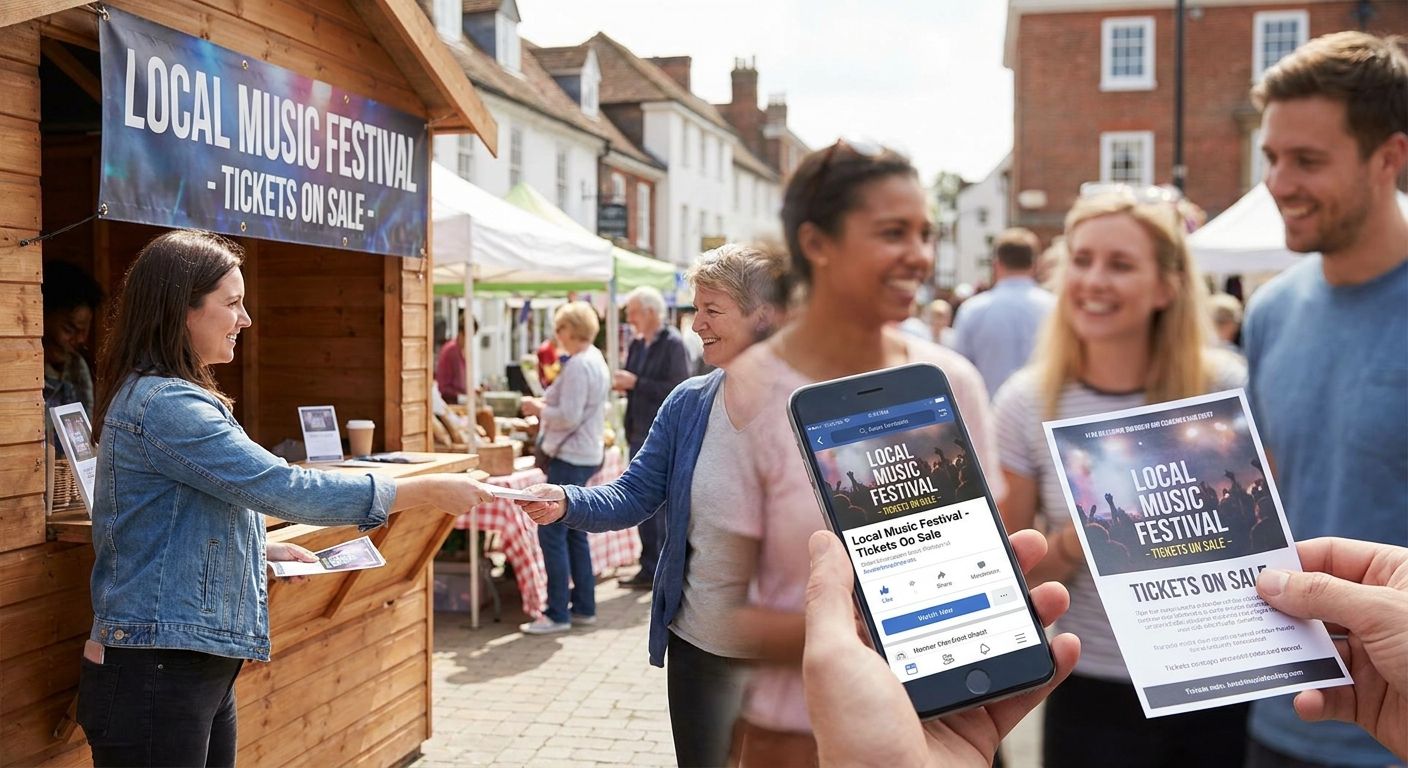
Your own Instagram or Facebook page reaches people who already know you. Local Facebook groups, Nextdoor, and neighborhood subreddits reach people who don't yet — and for a local event, that untapped audience is bigger than your existing followers.
Post 2-3 times across different local groups per week, varying the angle each time: one post about the event itself, one about a specific vendor or speaker, one behind-the-scenes photo. Common mistake: posting the identical flyer in every group on the same day, which reads as spam to moderators and gets removed.
5. Run one small paid boost in the final two weeks
Organic reach alone rarely closes the gap in the final stretch. A modest local ad boost — targeted by zip code radius, not broad city or interstate — reaches people organic posts missed. Set the radius to 10-15 miles for most local events; wider than that and you're paying for people who won't drive in.
Expected outcome: a short lift in ticket link clicks within 48 hours of the ad going live. Common mistake: boosting a generic post instead of one showing the ticket price and date clearly in the image itself.
List your next event on Gomry
Get discovered by locals actively browsing expos, shows, and classes near them.
6. Push urgency in the final 72 hours
A visible deadline moves fence-sitters. In the last three days before the event, switch every message — email, social, group posts — to urgency language: "last 30 tickets," "doors close at 6pm," or a visible countdown. This works because most local ticket buyers decide within 72 hours of the event, not weeks in advance.
Common mistake: staying silent in the final days out of fear of "annoying" your audience. Silence in the urgency window loses more sales than an extra reminder ever costs you.
7. Follow up with a post-event email within 48 hours
This step sells your NEXT event, not this one. Send a short thank-you with 2-3 photos from the event and a line inviting people to follow your page or list for the next date. Attendees who had a good experience are your cheapest audience for the next event you run — don't let that window close silently.
Troubleshooting
Ticket sales are flat two weeks out. Check whether your listing photo and price are visible without a click — buyers scroll past listings that hide the price. Add a midpoint email with a new hook (new vendor, new speaker, added time slot) instead of repeating the same announcement.
Social posts get likes but no clicks. The ticket link is probably buried in a comment or bio instead of the post itself. Put the direct link in the caption and pin it, and confirm the link opens straight to checkout, not a homepage.
Local group posts get removed. Most groups ban repeat identical posts or bare promotional flyers. Space posts at least 4-5 days apart per group and lead with a photo or question instead of a sales pitch.
Cross-promotion partners agreed but never posted. Send them a ready-made caption and image so posting takes them 30 seconds, not 10 minutes. Partners who have to write their own copy usually don't get to it.
Paid ad spend isn't converting. Narrow the geographic radius further — a 25-mile radius for a local event usually wastes half the budget on people too far to attend. Confirm the ad links straight to the ticket page, not the event listing page.
Attendees show up but don't buy add-ons or return for future events. Capture email addresses at check-in, not just at ticket purchase, so the post-event follow-up in Step 7 actually reaches everyone who walked through the door.
Tools and resources
- A discovery and ticketing platform for the listing itself — Gomry covers local expos, art shows, fitness classes, and fashion shows in one place
- Email tool with basic scheduling (even a free tier handles a 3-email sequence)
- A simple photo or video editing app for social posts — no professional gear needed for 2026-era feed content
- A shared spreadsheet or notes doc tracking which channel each ticket buyer came from, so next event's promotion starts smarter
What to do next
Once ticket sales stabilize, the next lever is repeat attendance — building a list of past buyers who convert faster than any cold channel ever will. Start that list with this event's check-in data, and the promotion cycle for your next event gets considerably shorter.
FAQ
What's the best way to promote a local event with no budget?
List the event on a free discovery platform and lean on local Facebook groups, Nextdoor, and email to past attendees. In 2026, organic reach in hyper-local groups still outperforms small paid budgets for events under 500 attendees.
How far in advance should I start promoting a local event?
Start 6-8 weeks out for events over 100 attendees, and 3-4 weeks for smaller gatherings. Most ticket buyers still decide within 72 hours of the event, so the early weeks build awareness while the final days close sales.
Is email or social media better for selling local event tickets?
Email converts better per contact because the audience already opted in, but social media reaches new people email can't. Use email for your 3-touch sequence and social for reaching people outside your existing list.
How much should I spend on paid ads for a local event?
Keep paid spend small and geographically tight — a 10-15 mile radius targeted in the final two weeks outperforms a wider, earlier campaign. Most local organizers overspend on broad targeting instead of narrow, well-timed boosts.
Should I use Eventbrite, Gomry, or my own website to sell tickets?
A discovery platform like Gomry adds visibility to people already browsing local events, which your own website can't generate on its own. Use the platform for discovery and your ticket link everywhere else for direct promotion.
What's the biggest mistake organizers make promoting local events?
Posting the same flyer everywhere on the same day instead of varying the message across channels and weeks. This reads as spam in local groups and burns attention before the urgency window even opens.
How do I get local businesses to promote my event?
Approach adjacent, non-competing businesses with a specific, low-effort ask like leaving postcards at their register. Offer visibility at your event in return — most local businesses will say yes to a concrete, easy request.
When should I send the final reminder before an event?
Send the last push 48-72 hours before the event with urgency language about limited tickets or a closing deadline. This window is when most local ticket buyers actually decide, so silence here costs more sales than an extra email.
One last thing
The organizers who consistently sell out aren't the ones running the most channels — they're the ones who track which single channel actually drove the last ticket sale and double down on it next time. Most never check, so they keep guessing at the same mix of guesswork year after year.